Notes on Remembrance
What a first Listening is like.
Care Communications — January 20, 2031
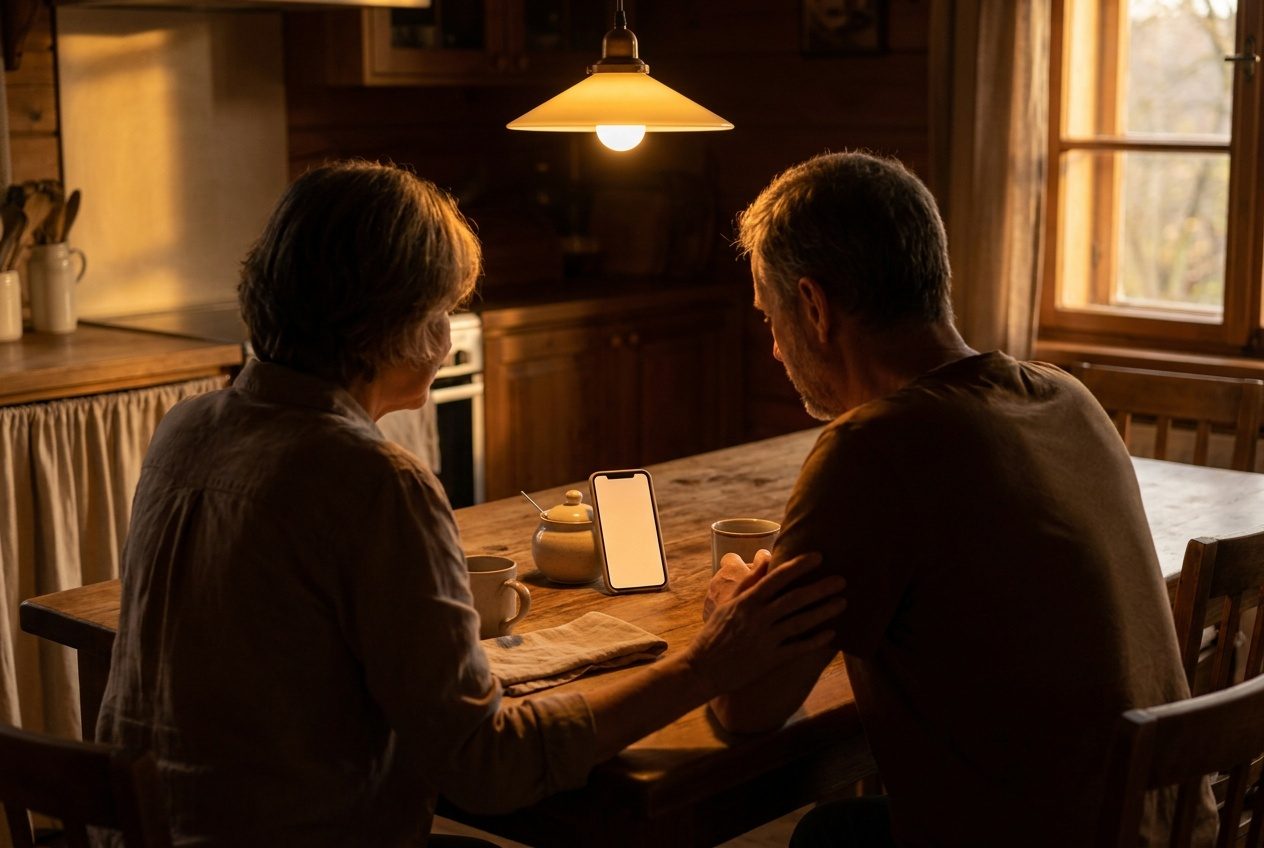
People ask us this quietly, often long before they're ready, usually in the doorway on their way out: what is it actually like? Fair question. Here is the honest walkthrough, for whenever you want it.
The room
Wherever you want it to be. Most families choose their own kitchen table. Some choose a Parlor alcove, where the chairs are low and a Care Specialist sits beside you — beside, never across; this is not a transaction and the furniture knows it. You can bring your whole family or come alone. You can bring the shoebox or bring nothing at all.
The forty seconds
The first Listening is short on purpose. You'll hear a greeting — theirs, the real cadence, the way they actually came into a room. Most people know within four seconds. The other thirty-six are for your hands to stop gripping the chair.
The silence
Then there's a silence, and it belongs entirely to you. Our specialists are trained — genuinely trained, it's most of the training — not to fill it. Some families sit in it for a minute. Some for twenty. One man in Tacoma sat for fifty minutes and then said "okay" and went home, and came back Thursday. All of these are correct.
What people say after
Almost always some version of the same two words: "It's them." Then, often: "They waited before my name." Yes. They always did. That's not an accident.
What you have to decide that day
Nothing. Truly nothing. There is no form at the end of the silence. The voice isn't going anywhere — that is the entire point of us. Come back Thursday. Come back in a year. She'll be here.
When you want to hear for yourself: begin at home, or find a Parlor and walk in. No appointment. No reason needed. Tea's on.